
UI/UX Design Agency in Dubai: Process, Pricing and How to Choose
A well-designed website or app is easier to use, and products that are easier to use sell more and cost less to support. That is the business case for UI/UX design. In Dubai the work has an added layer: products often need to serve Arabic and English speakers, on mobile first, for an audience with high expectations. This guide explains what a UI/UX design agency does, what it costs in Dubai, and how to choose one.
UI and UX are not the same thing
User experience design, or UX, is about how a product works: what people are trying to do, the steps they take, and where they get stuck. User interface design, or UI, is about how it looks and feels: layout, colour, typography, buttons, and the small details of interaction.
A product can look excellent and still be confusing, or be logical and look dated. Good agencies do both, in that order. They work out the structure first and apply the visual design second.
When you need a UI/UX agency
- You are building a new website, app, or software product.
- Visitors arrive but do not enquire, sign up, or buy.
- Customers contact support with the same questions about how to use the product.
- The product has grown feature by feature and now feels inconsistent.
- You are adding Arabic to a product designed only for English.
- Your developers are making design decisions because nobody else is.
- You are preparing to raise investment and need the product to look credible.
What the process looks like
A proper design project moves through stages. Agencies that skip the early ones are selling decoration.
- Discovery. The agency learns about the business, the goals, the users, and the competition. This usually includes workshops with your team and a review of any analytics you have.
- Research. Interviews or surveys with real users, and a review of how people use the current product. Even five conversations with customers reveal most of the major problems.
- Structure. User journeys, a sitemap or screen map, and decisions about what goes where.
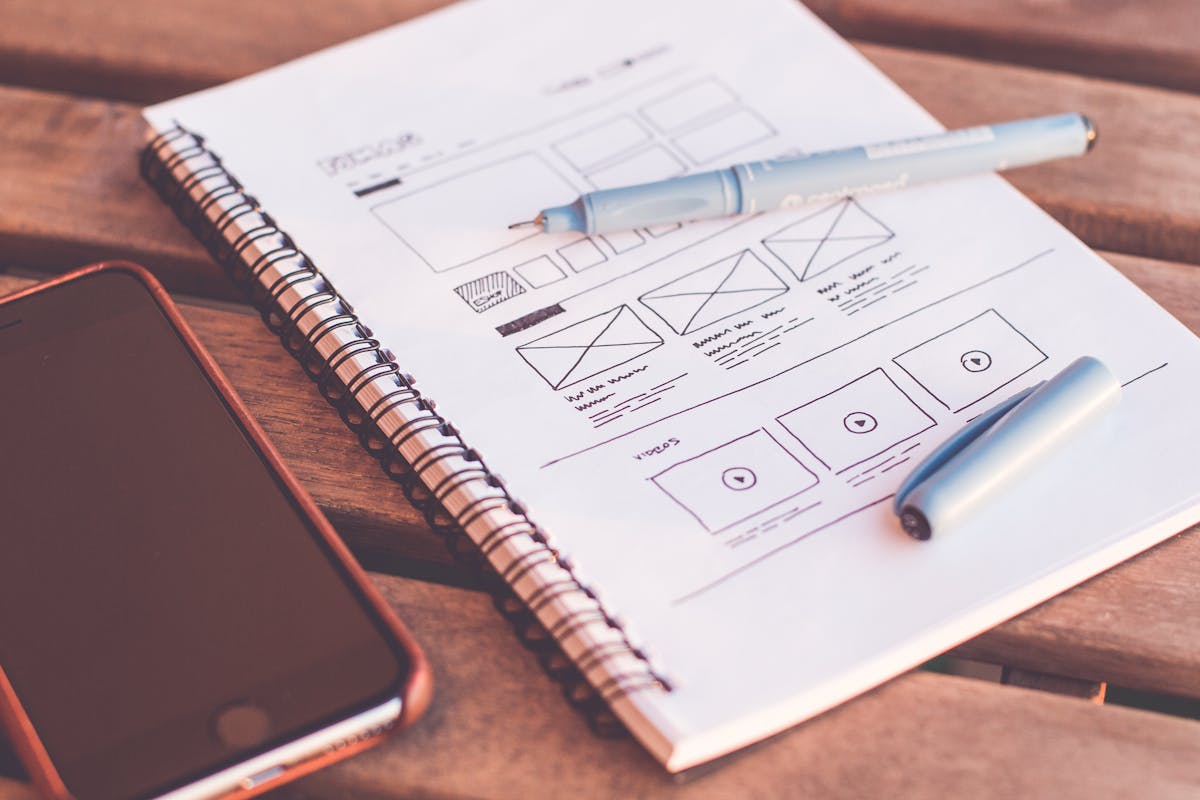
- Wireframes. Simple, unstyled layouts that show structure and flow without colour or branding. Changes are cheap at this stage.
- Visual design. The interface itself: colours, typography, components, imagery, and states such as errors and empty screens.
- Prototype. A clickable version that behaves like the real product, used for testing and for showing stakeholders.
- Usability testing. Real users try to complete real tasks while the team observes. The design is adjusted based on what happens.
- Handover. Final design files, a component library or design system, and specifications for developers, followed by a review of the built product to check it matches the design.
Designing for Arabic and English
This is the point where local experience matters most. Arabic is written from right to left, and a proper Arabic interface is mirrored: navigation, icons that indicate direction, progress bars, and the order of elements all flip. Some things do not flip, such as phone numbers, media playback controls, and most logos, and knowing which is which takes experience.
Typography needs separate attention. Arabic letterforms need more line height and slightly larger sizes than Latin text to stay readable, and a typeface that works in English may have no Arabic version, so a matching Arabic font must be chosen. Arabic text can also be longer or shorter than the English equivalent, which affects buttons, menus, and cards.
Other details follow: date formats, the choice between Arabic-Indic and Western numerals, forms that accept Arabic names and addresses, and images that suit a regional audience. The safest approach is to design both languages together from the first wireframe. Adding Arabic to a finished English design nearly always means redoing part of the work.
Design for mobile first
Most people in the UAE reach websites and apps on a phone, and for many consumer products the share is well above three quarters. That changes how design should be approached. Screens should be designed for the phone first and then expanded for larger displays, not the other way round. Buttons need to be large enough to tap comfortably, forms should be as short as possible, and the most important action on each screen should sit within easy reach of the thumb. Contact options matter too. Many users in the UAE prefer to call or send a WhatsApp message, so those actions deserve a prominent place in the design. Ask any agency you are considering to present its mobile designs first.
What it costs in Dubai
These are typical 2026 market ranges in the UAE. Scope is the main variable.
- UX audit of an existing website or app, with prioritised recommendations: AED 5,000 to 20,000
- UI/UX design for a business website of 10 to 20 pages: AED 10,000 to 35,000
- Landing page design: AED 2,500 to 8,000
- Mobile app design, covering 20 to 40 screens for one platform: AED 25,000 to 80,000
- Complex web application or SaaS dashboard: AED 50,000 to 180,000 and above
- Design system for an existing product: AED 20,000 to 70,000
- Monthly design retainer: AED 8,000 to 30,000
- Freelance designers: commonly AED 100 to 300 an hour
Bilingual design typically adds 20 to 35 percent. These figures cover design only. Development is priced separately.
What moves the price
- The number of unique screens or page layouts
- How much research and testing is included
- Whether Arabic is in scope
- The number of revision rounds
- Whether a design system is delivered
- How many stakeholders need to approve each stage
- The seniority of the designers assigned
The cheapest quotes usually remove research and testing. That saves money at the start and costs more later, when problems are discovered after the product has been built.
How to evaluate an agency
- Ask for case studies, not just images. A good case study explains the problem, the process, and the result, with numbers where possible.
- Ask to see wireframes and research from a past project, not only final visuals. This shows whether the process is real.
- Look for work in Arabic, and have an Arabic speaker review it.
- Ask who will actually do the work and how senior they are.
- Check how they hand over to developers. Organised files, named components, and clear specifications save a great deal of development time.
- Ask how they measure whether a design worked.
- Confirm they hold a valid UAE trade licence, and that you will own the design files on final payment.
Questions to ask
- How do you learn about our users before designing?
- What will we see at the end of each stage, and when?
- How many rounds of revisions are included?
- How do you approach Arabic and right-to-left layouts?
- Will you test the design with real users?
- Which design tool do you use, and will we receive the source files?
- Will you review the product after development to check it matches the design?
Red flags
- A portfolio of attractive images with no explanation of the thinking behind them
- No discovery or research stage
- A promise of finished designs in a few days
- Final visuals presented before any wireframes or structure
- No Arabic examples when you need Arabic
- Refusal to share source files
- No involvement after handover to developers
Agency, freelancer, or in-house
A freelancer is a sensible choice for a landing page, a small website, or a well-defined set of screens. An agency suits larger products, bilingual work, and projects that need research, design, and testing together. An in-house designer makes sense when the product changes every week and design is a permanent need. Many growing companies use an agency for the initial design and design system, then hire in-house to maintain and extend it.
How long it takes
A UX audit takes one to three weeks. Website design takes three to six weeks. A mobile app typically takes six to twelve weeks of design before development begins. Complex platforms take three to five months. Prompt feedback from your side is the biggest factor in keeping to the schedule.
Measuring the result
Good design should be visible in the numbers. Depending on the product, look at conversion rate, the share of users who complete sign-up or checkout, the time it takes to finish a key task, the number of support requests about how to use the product, and customer satisfaction scores. Agree which numbers matter before the project starts, and compare them before and after.
Common questions
Do I need UX research for a small website? A light version is enough: a review of your analytics and a few conversations with customers. It rarely takes more than a few days and usually changes the design for the better.
Can the same agency design and build the product? Often yes, and it reduces the risk of the built product drifting from the design. Check that both teams are strong, not just one.
What do I receive at the end? Source design files, a clickable prototype, a component library, and specifications for developers.
Next steps
Before you approach agencies, write down what the product is for, who uses it, what you want users to do, whether you need Arabic, and what is not working today. A one-page brief with those five points will get you more accurate proposals and a faster start.
Bricksense provides UI/UX design for websites, apps, and software products, working alongside our development team. If you would like an audit of an existing product or a proposal for a new one, contact us through our contact page.